Back to recipes
South indianVeganVegetarianKid friendly

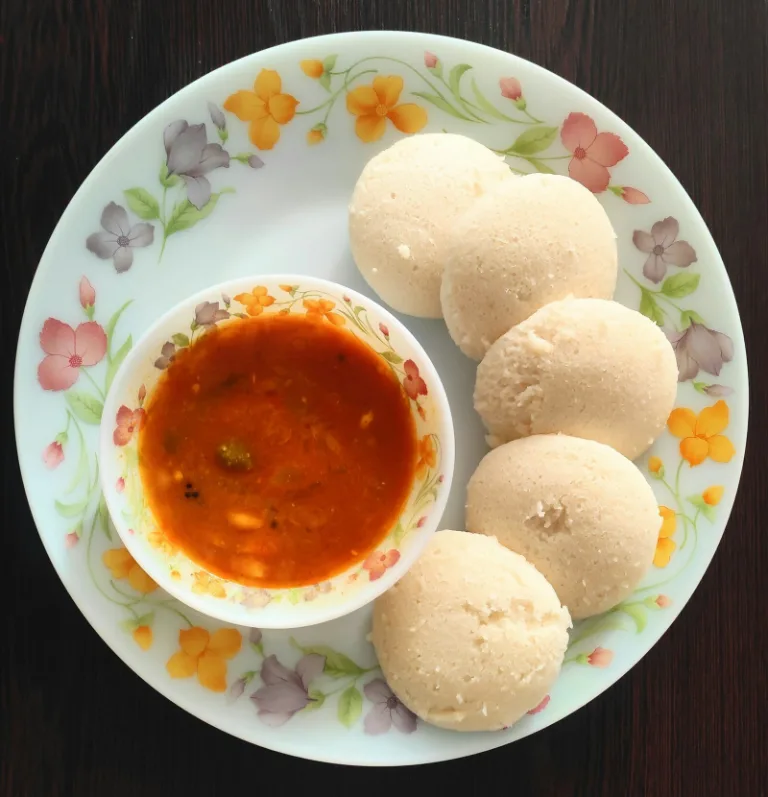
Idli

Soft, fluffy steamed cakes of fermented rice and urad dal batter, mild and slightly tangy. Serve hot with coconut chutney and sambar. Makes about 20 idlis (5 per person); the rice and dal soak for 4 to 6 hours and the batter ferments overnight.
30
Prep min
40
Cook min
4
Serves
Medium
Level
Idli

Photo: Jacob Vathikulam / Unsplash

Cooking steps

1

Put the idli rice in a large bowl and rinse it 3 or 4 times, rubbing it between your hands, until the water runs almost clear. Cover with fresh water by about 5 cm and leave it 4 to 6 hours.

a grain crushes between your fingers with no hard centre
Idli rice is parboiled rice sold for this purpose; it gives soft, fluffy idlis. Ordinary raw rice makes them firmer. Rinse by mid-morning to steam idlis next morning.
2

In a second bowl, rinse the urad dal and fenugreek seeds 2 or 3 times, then cover with fresh water by about 5 cm and leave them 4 to 6 hours too.

a grain of urad dal splits easily when pressed, with no hard centre
Save the soaking water when you drain the urad dal; it is starchy and good for grinding.
3

Drain the urad dal and fenugreek. Grind them in a wet grinder or mixer jar, adding cold water a few spoonfuls at a time, until very smooth, light and fluffy: about 5 to 8 minutes in a mixer, 20 in a wet grinder.

it looks thick, glossy and foamy, and a small blob floats in a cup of water
In a mixer, run it in 1-minute bursts with short pauses so the jar stays cool; warm batter ferments poorly. Too much water makes flat idlis.
4

Scrape the urad batter into a large bowl. Drain the rice and grind it with just enough cold water to keep it moving, to a thick batter with a fine grain.

rubbed between finger and thumb it feels slightly grainy, like fine sand
This slight coarseness gives idlis their soft, open texture; ground completely smooth, they turn dense and sticky.
5

Pour the rice batter into the urad batter, add the salt and mix with a clean hand, folding and swirling, for a minute or two.

evenly blended, thick, and dropping from your fingers in heavy blobs
Use a bowl no more than half full; the batter doubles. In very hot weather, add the salt after fermenting so it doesn't turn sour too fast.
6

Cover the bowl loosely with a lid or plate and leave it to ferment overnight, 8 to 12 hours, in a cosy, draught-free spot.

doubled in volume, domed and spongy, full of tiny bubbles, and smells pleasantly sour
It ferments best at 25 to 32 °C. In cold weather, put it in a switched-off oven with only the light on; it can take up to 16 hours. Stand the bowl on a plate in case it overflows. No rise at all usually means it was too cold or too thin.
7

Stir the fermented batter gently from the bottom 2 or 3 times without beating out the air. If it is very stiff, loosen it with a spoonful or two of water.

thick but pourable: it falls from a ladle in a slow, heavy ribbon
Any thinner and the idlis spread and turn flat. Steam them now, or refrigerate the batter, covered, for up to 3 days.
8
Boil water: 5 minHigh heat

Pour water into the base of the idli steamer or pressure cooker to about 3 cm deep, below the lowest mould, and bring it to a boil over high heat.

steam rises steadily from the pot
In a pressure cooker, take off the whistle or weight; idlis steam without pressure.
9

Grease each idli mould lightly with oil, using a fingertip or a small brush, so the idlis slip out easily.

Or line the moulds with squares of damp muslin, the traditional way.
10

Ladle batter into each mould until about three-quarters full. Don't stir or press it, so the air stays in.

each mould is about three-quarters full, with a smooth, domed surface
Overfilled moulds stick together as the idlis rise.
11
Steam idlis: 11 minMedium high heat

Stack the moulds on the stand, lower it into the steamer, cover, and steam over medium-high heat 10 to 12 minutes.

the idlis are puffed, matt and firm, and a toothpick pushed into the centre comes out clean
Don't open the lid in the first 8 minutes, or the steam escapes and they stay dense. Keep the water at a steady boil.
12
Idlis settle: 5 min

Turn off the heat and leave the idlis covered in the steamer 5 minutes before opening, so they firm up and come out cleanly.

the steam has died down when you lift the lid
Open the lid away from your face; trapped steam can burn.
13

Lift out the stand with a thick cloth. Dip a spoon in water and run it around each idli, then scoop it out whole onto a plate.

the idlis come away whole, soft and spongy, with smooth tops
The moulds are very hot. If the idlis stick, leave them 2 minutes more; they release more easily once settled.
14
Steam next batch: 11 minMedium high heat

Grease and fill the moulds again and steam the remaining batter the same way, checking the water in the base first and topping it up with boiling water if needed.

a toothpick pushed into an idli comes out clean
Keep the cooked idlis covered with a clean cloth so they stay soft.
15

Serve the idlis hot and steaming, straight from the steamer, with coconut chutney and sambar.

Cool leftovers, then refrigerate in a covered container for up to 2 days. Reheat by steaming 3 to 5 minutes until hot right through; sprinkle with water first if they look dry.
Recipes from your own pantry
Hestily suggests dinners from what you have, starting with what needs using first.

Made this? Share a photo and tag @hestily.app on Instagram (opens in a new tab).